← Back to Gallery
Take the Survey →
The Queer Year BookStyle 3: Minimalist Line Art
Sample 1 of 5 · Activist / Resistance Moment
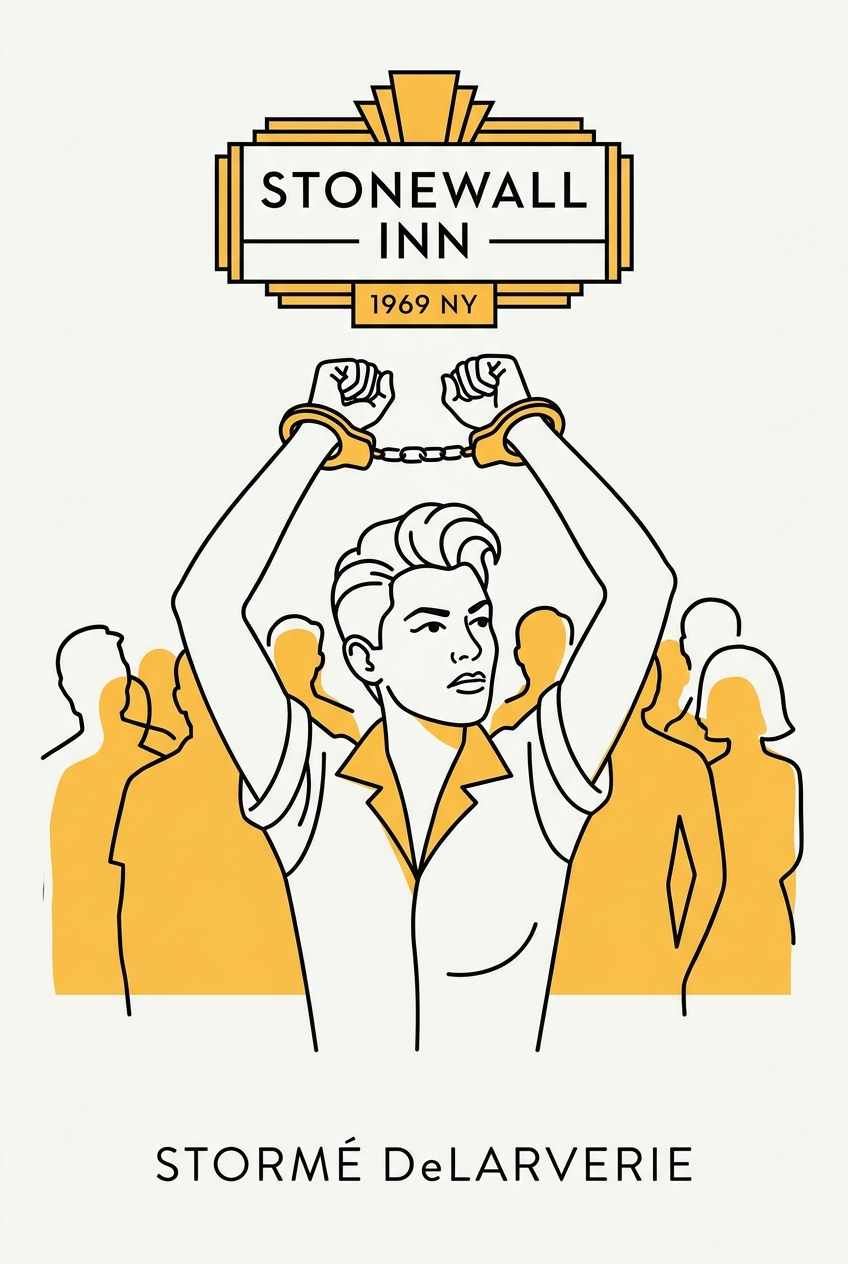
Storme DeLarverie, 1969
What is the moment in your own life when you stopped waiting for permission and decided to take up space? You don't have to start a revolution. You just have to do something.
The Night the Stonewall Inn Fought Back
Nobody planned to make history that night. The Stonewall Inn was, by most accounts, a rough place run by the mob and raided by police so often the customers knew the drill: line up, show ID, leave. But something was different on June 28, 1969. When Storme DeLarverie, a Black butch lesbian, turned to the crowd outside with blood on her face and fire in her voice, something cracked open in the city and in a movement. Drag queens, transgender women, gay men, and lesbians stood their ground together. Sylvia Rivera and Marsha P. Johnson were there, throwing punches and history in equal measure. The riot lasted five days. The movement it launched is still going. Every Pride march, every hard-won right, every moment you walked into a room as your full self leads back to a night when people who had everything to lose decided enough was enough.
Sample 2 of 5 · Triumph / Victory
Even when it seems impossible
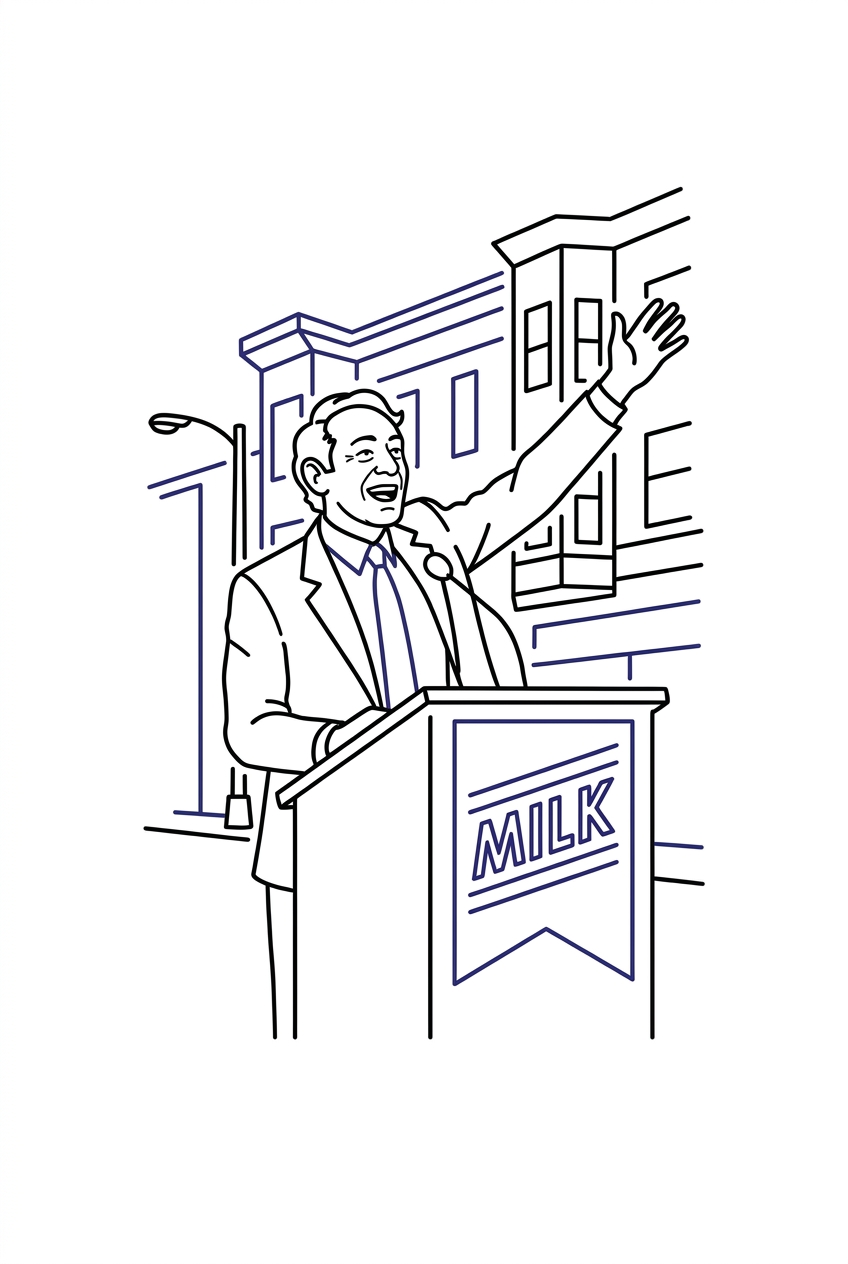
Harvey Milk, 1977
What are you on the third try of? What would it mean to keep going not because success is guaranteed but because the attempt itself is an act of defiance?
The Camera Shop Owner Who Changed Everything
Harvey Milk was 40 years old when he finally decided to stop hiding. He had been a Navy officer, a Wall Street financial analyst, and a man who kept his sexuality tucked neatly out of view. Then something in him shifted. He moved to San Francisco's Castro district, opened a camera shop, and started showing up. He ran for city supervisor and lost. He ran again and lost again. He ran a third time. On November 8, 1977, Harvey Milk won. He became the first openly gay man elected to major public office in any U.S. city, and he knew exactly what that meant. "I know that you cannot live on hope alone," he said, "but without hope, life is not worth living." He was assassinated the following year. But his hope survived him. It lives in every queer person who has ever run for office, knocked on a door, or simply refused to be invisible.
Sample 3 of 5 · Cultural Milestone
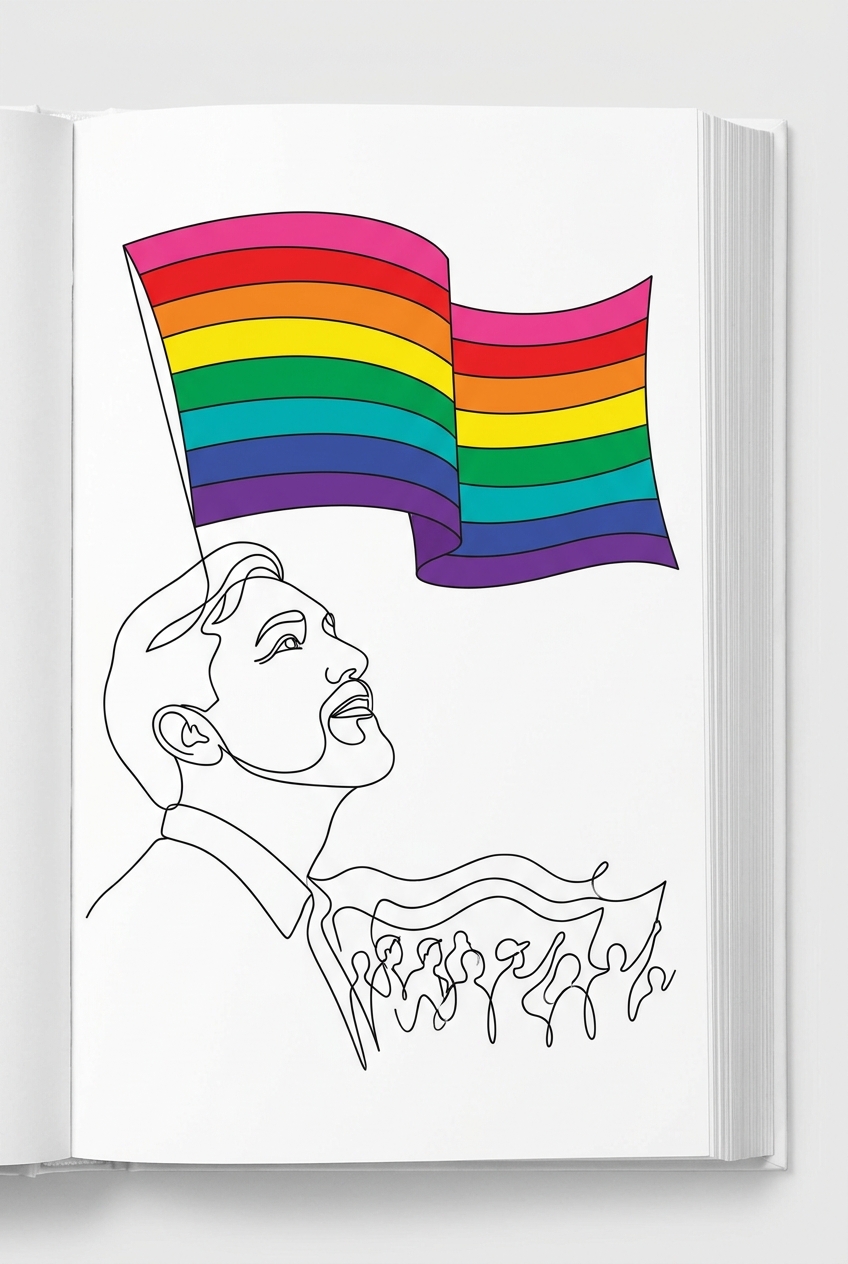
Gilbert Baker, 1978
What symbol, act, or creation in your own life has carried meaning beyond what you intended? What are you making today that might outlast you?
A Man with Needle and Thread Made Something Beautiful
Gilbert Baker was a gay man, an Army veteran, a drag queen, and a self-taught seamstress. In 1978, activist Harvey Milk challenged him to create a symbol of gay pride, something to replace the pink triangle, which had been used by Nazis to mark gay men for death. Baker thought about what queer people needed and landed on color. He chose eight colors at first: hot pink for sex, red for life, orange for healing, yellow for sunlight, green for nature, turquoise for magic, blue for harmony, and violet for spirit. He and a team of volunteers hand-dyed and hand-stitched the first flag in a San Francisco recreation center. When it flew over the Gay Freedom Day parade on June 25, 1978, something remarkable happened. People looked up and saw themselves not as something to be hidden or erased but as a spectrum. A full, irreducible, beautiful spectrum.
Sample 4 of 5 · Activist / Resistance (AIDS Crisis)
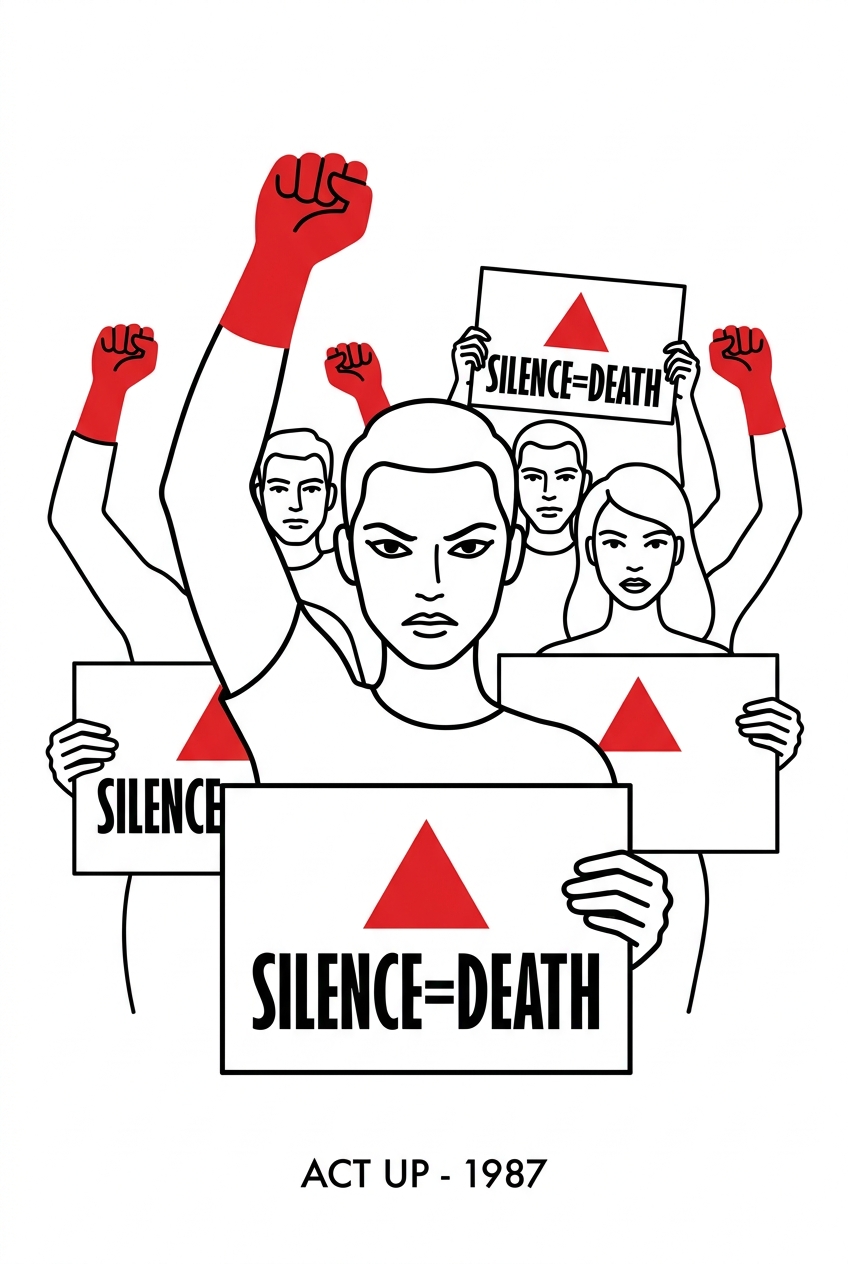
ACT UP, New York City, 1987
Anger, when it is rooted in love and pointed at injustice, is a form of power. What in your world is demanding your anger right now? What would you do if you stopped waiting for someone else to fix it?
Silence Equals Death. They Chose to Be Loud.
By early 1987, more than 36,000 Americans had been diagnosed with AIDS. The government was largely silent. The medical establishment was moving at the speed of bureaucracy while people were dying at the speed of a virus. Larry Kramer stood up in a room at the Lesbian and Gay Community Services Center in New York City and asked a simple, scalding question: Do you want to start a political organization, or do you want to sit on your hands and die? Three hundred people showed up that night. Two weeks later, ACT UP staged its first demonstration on Wall Street, shutting down traffic and demanding lower drug prices and faster FDA approval. They were angry, loud, creative, brilliant, and right. And because they refused to be silent, people lived who otherwise would have died.
Sample 5 of 5 · "A First"
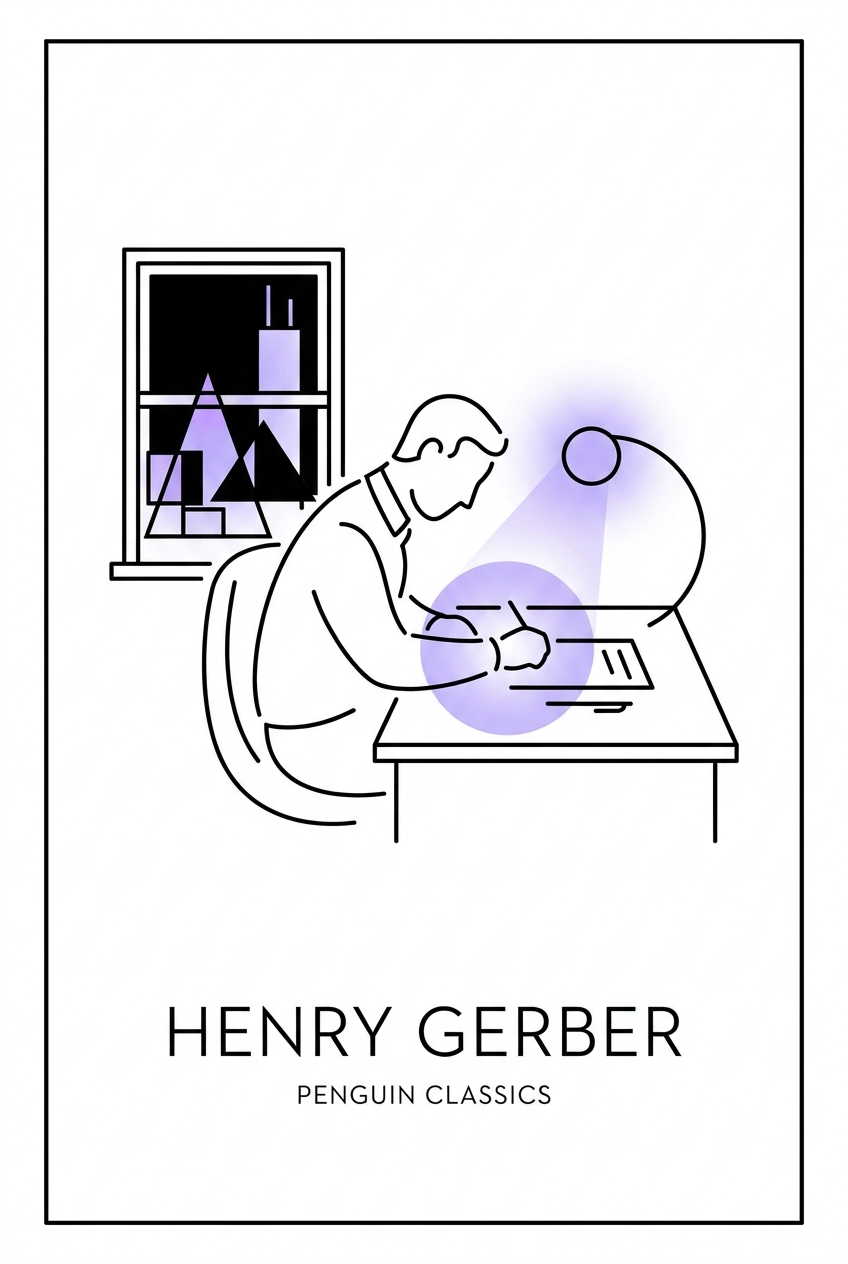
Henry Gerber, Chicago, 1924
What do you want to pursue even if success may be unachievable?
The Foundation Nobody Saw Him Lay
Henry Gerber was a German immigrant who had seen something remarkable. In Weimar Germany in the early 1920s, there were gay rights organizations, gay bars, gay newspapers, and gay people living with a visibility that was almost unimaginable in the United States at the time. Gerber returned to Chicago carrying the memory of what was possible. On December 10, 1924, the state of Illinois granted him a charter for the Society for Human Rights, making it the first documented gay rights organization in American history. He published a newsletter called Friendship and Freedom, the first gay publication in the country. Then the police came. Members were arrested. Gerber was fired from his job. The society dissolved. He lost almost everything. And yet. Thirty years later, when the Mattachine Society and other homophile groups were quietly organizing in living rooms and church basements, Henry Gerber was still there, writing letters, making connections, refusing to let the idea die.